SOC 2 vs ISO 27001 for Startups: Map Once, Choose by Buyer
ISO/IEC 27001 is a certifiable information security management system standard, while SOC 2 is a CPA attestation against the AICPA Trust Services Criteria. If your buyers are U.S. enterprises that want an auditor’s opinion, start with SOC 2 Type II. If you need a certificate that international partners and regulators recognize, start with ISO/IEC 27001. If both matter, build one mapped program.
TL;DR:
- A SOC 2 Type I can help unblock an urgent deal before operating history exists, but buyers may expect a later Type II report.
- SOC 2 Type II typically examines controls over 6 to 12 months, so teams must collect evidence continuously rather than assemble it at audit time.
- A shared control program can reuse policies and evidence across both frameworks, although separate documentation expectations mean mapping will not remove every extra task.
- ISO certificates can be shared freely, while SOC 2 reports usually go only to defined stakeholders, often under confidentiality agreements.
- A contract or regulator that names a standard overrides general market preference, so verify written requirements before choosing an audit path.
Table of Contents
- What ISO/IEC 27001 is and what certification means
- What SOC 2 is and how Type I and Type II reports differ
- Where ISO/IEC 27001 and SOC 2 overlap and how mapping works
- Key differences that change vendor selection and buyer trust
- How to choose between SOC 2 and ISO/IEC 27001: a decision framework
- Pursuing both standards: sequencing, mapping and practical steps to reduce duplication
- Implementation timeline and high-level cost drivers
- What we tell startups about compliance sequencing
- FAQ
- Sources
- Authoritative standards and guidance to read next
What ISO/IEC 27001 is and what certification means
ISO/IEC 27001:2022 sets out requirements for an information security management system (ISMS) that an organization establishes, implements, maintains and continually improves. It applies to organizations of any size. The standard is about management, not just technology: you assess risk, choose controls, assign ownership and keep improving the system.
Two documents sit at the center of the approach. The Statement of Applicability (SOA) lists the controls you consider necessary and explains why you excluded any others. Annex A serves as the reference control set. According to an ISO/IEC JTC 1/SC 27 journal, organizations decide which controls apply through risk assessment and their own context, so Annex A is a menu, not a mandatory checklist.
Certification comes from an accredited certification body, and ISO/IEC 27006-1 sets the requirements those bodies must meet to audit competently, consistently and impartially. That is why an ISO certificate carries weight beyond your own borders.
What an ISO certificate tells a stakeholder:
- You run a documented, risk-based ISMS that an independent certifier has audited.
- Your scope and chosen controls are recorded in the SOA.
- The system is kept alive through surveillance audits and periodic recertification, not a one-time check.
- The certificate should cite its full reference, such as “certified to ISO/IEC 27001:2022.”
Pro Tip: Write your scope statement before you write a single policy. A tight, honest scope shortens the audit and keeps the SOA defensible.
What SOC 2 is and how Type I and Type II reports differ
SOC 2 is built on the AICPA Trust Services Criteria. Qualified CPA firms perform the audit as an attestation engagement under SSAE 18. Security is the one mandatory category. Availability, processing integrity, confidentiality and privacy are optional, and you pick the ones that match what you promise customers.
The result is not a certificate. It is a report containing the auditor’s opinion, a description of your system and the tests performed. You choose between two types:
- Type I describes whether controls are designed appropriately at a single point in time.
- Type II tests whether those controls operated effectively over a defined period, commonly 6 to 12 months.
- Reports are meant for defined stakeholders such as customers, prospects and their auditors, not for public display.
- U.S. enterprise buyers request SOC 2 so often that it has become a default line in security questionnaires.
Why Type II is the one buyers trust: PwC Switzerland notes that an ISO certificate reflects the situation on a given date, while a Type II report offers an auditor’s opinion on operating effectiveness over time.
Type I is a reasonable first step when a deal is waiting and you have no observation history yet. Many buyers will accept it as a bridge with a commitment to Type II. For SaaS teams that are tired of answering security questionnaires one at a time, this practical guide to SOC 2 for SaaS explains how a report replaces much of that repetitive review work.
Where ISO/IEC 27001 and SOC 2 overlap and how mapping works
The two frameworks ask for much of the same underlying behavior, even though they package it differently. You will see the same themes in both audits:
- Access control, including provisioning, reviews and removal of access.
- Incident response, with defined roles, escalation paths and post-incident review.
- Vendor management, meaning due diligence and ongoing oversight of suppliers.
- Configuration and change control for systems and code.
- Logging and monitoring to detect and investigate problems.
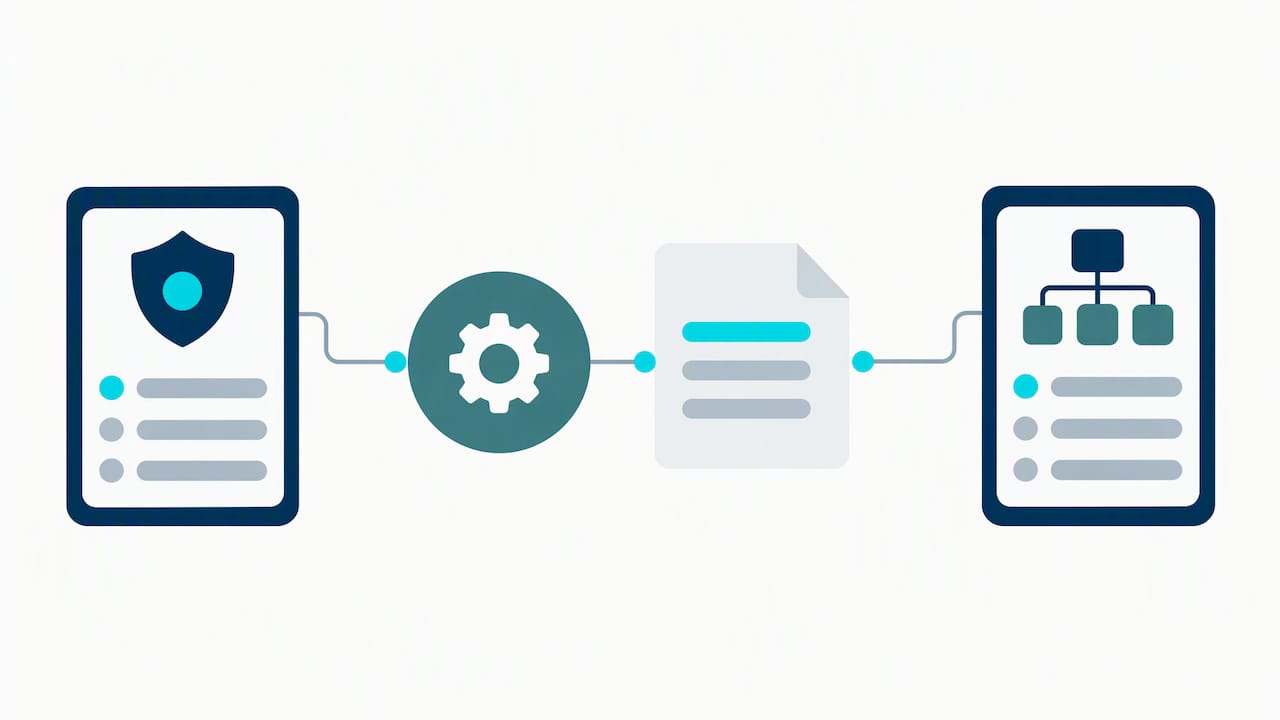
The AICPA publishes a Trust Services Criteria to ISO/IEC 27001 mapping spreadsheet that lines up SOC 2 criteria against ISO/IEC 27001 controls. It helps you spot where one control implementation can serve both audits.
In practice, this means you implement a control once, write one policy and procedure, and keep one body of evidence with cross-references to each framework. Your access review screenshot, for example, can support a SOC 2 criterion and an Annex A control at the same time. The mapping will not eliminate all extra work, because each framework has its own documentation expectations, but it removes most of the duplicated effort.
Early-stage teams can make this even easier by designing controls well from the start. Our guide to security by design for early-stage startups covers how to build that foundation before an auditor arrives.
Key differences that change vendor selection and buyer trust
The differences matter most when a buyer reads your evidence. Here is how the two compare across the dimensions procurement teams care about.
Certification versus attestation. ISO gives you a certificate issued by an accredited certifier. SOC 2 gives you a CPA’s opinion on your controls. Type II carries the stronger assurance because it tests operation over a period.
Scope. An ISMS can span the whole organization. SOC 2 is usually scoped to the services and systems that customer contracts depend on, which keeps it narrower and closer to the product.
Audience and geography. ISO is recognized internationally. SOC 2 has strong traction with U.S. buyers and with their statutory auditors.
Reporting and distribution. An ISO certificate is concise and can be shared freely. A SOC 2 report is detailed and normally goes to defined stakeholders, often under a confidentiality agreement.
Timing and maintenance. ISO follows a certification cycle with surveillance audits. SOC 2 Type II relies on an observation period and a repeating annual cadence.
The decisions that tend to shift a deal, in rough order of impact:
- The buyer’s stated requirement, because a named standard in a contract settles the question.
- How much detail the buyer’s security team wants to read.
- Whether the buyer’s own auditors need an opinion on operating effectiveness.
- How widely you need to show proof without a nondisclosure agreement.
- How often you can sustain a full audit cycle.
Pro Tip: Ask your top five prospects which evidence they accept before you commit to either audit. One short question can save months.
How to choose between SOC 2 and ISO/IEC 27001: a decision framework
Start with who is paying you. U.S. enterprise procurement teams often ask for SOC 2, while international partners commonly accept ISO. If you sell to both, let the largest pending revenue decide the first audit. Our article on SOC 2 for international startups selling to U.S. enterprises goes deeper on that scenario, and our U.S. compliance checklist for foreign cybersecurity startups covers the wider buyer expectations you will meet.
Next, check what your contracts and regulators name. If a contract or regulator specifies a standard, that path wins regardless of preference.
Then weigh time and resources. If customers need an auditor’s attestation quickly, a SOC 2 Type I can unblock deals while you accumulate the history Type II needs. If international credibility is the goal, ISO/IEC 27001 is the stronger lead.
Score your situation against this ranked checklist:
- Buyer requirement: What does the largest prospect or customer ask for in writing?
- Geographic scope: Where will your future revenue come from?
- Audit timeline: How soon must evidence exist, and can you wait for an observation period?
- Control maturity: Do you already have documented risk management, or are you starting from scratch?
- Budget: Can you fund the audit and the remediation, not just the audit fee?
Quick reading of the results:
- Mostly U.S. enterprise buyers and a need for an auditor’s opinion points to SOC 2 Type II.
- Mostly international partners and regulators points to ISO/IEC 27001.
- Strong pressure from both sides points to a mapped program, covered next.
- Low maturity and an urgent deal points to SOC 2 Type I as a bridge, with a clear plan for what follows.
Pursuing both standards: sequencing, mapping and practical steps to reduce duplication
Whichever audit you do first, begin with a risk assessment and an ISMS baseline. That work is the heart of ISO, and it gives a SOC 2 auditor structured evidence of how you identify and treat risk.
There are two common sequences:
- ISO first: You build the management system foundation, then add SOC 2 criteria and the report. This suits teams with international customers or strong internal discipline.
- SOC 2 first: You answer the customer-driven demand, then extend into a full ISMS. This suits teams with U.S. deals in the pipeline.
Practical steps to avoid doing the work twice:
- Map the Trust Services Criteria to Annex A with the published spreadsheet, then tag each policy and evidence item with both references.
- Reuse policies, procedures and monitoring evidence wherever the mapping shows overlap.
- Pick one tool or repository for evidence so both audits draw from the same source.
- Talk to your auditor and certifier early to confirm scope and what evidence each will accept.
Pro Tip: Keep a single control register with one row per control and a column for each framework. When an auditor asks for evidence, you already know where it lives.
Implementation timeline and high-level cost drivers
An ISO engagement usually moves through a gap analysis, remediation, an initial certification audit, and then surveillance audits across a multi-year cycle. If you are certifying now, note that the 2022 edition updated Annex A, and the IAF transition requirements define how certification bodies and certified clients handle the move to ISO/IEC 27001:2022.
SOC 2 timing depends on the type. Type I can come together faster because it reflects one point in time. Type II needs an observation period, so the calendar time to a Type II report is longer even when your controls are ready when the period begins.
What drives the calendar: a SOC 2 Type II report covers operating effectiveness over a defined period, so evidence has to be collected continuously, not assembled at the end.
The main cost categories to budget for:
- External auditors or certification bodies.
- Internal remediation and control implementation.
- Tooling for evidence collection and monitoring.
- Staff time, which is often the largest hidden line.
We do not publish price figures for audits here, because fees vary widely by scope, auditor and company size. Get quotes from at least two providers once your scope is defined.
What we tell startups about compliance sequencing
Buy the evidence your buyers actually ask for, in the order they ask for it. Too many early teams chase a framework because a competitor displays its logo, then discover no prospect cared. For U.S. enterprise deals, SOC 2 Type II usually unlocks the contract. For international expansion and broad partner recognition, ISO/IEC 27001 is more persuasive. If both are real needs, plan one mapped program and automate evidence collection from the outset, so each audit becomes a repackaging exercise instead of a new project.
— Thiago Vieira
FAQ
What is the difference between ISO 27001 and SOC 2 compliance?
ISO/IEC 27001 certifies that you run a management system for information security, and an accredited certification body issues the certificate. SOC 2 is a CPA’s attestation report on your controls against the Trust Services Criteria. ISO is internationally recognized, while SOC 2 is especially common with U.S. buyers.
Is SOC 2 harder than ISO 27001?
Neither is simply harder, because they test different things. ISO demands a full management system with documented risk treatment, while a SOC 2 Type II requires proof that controls worked over an observation period. The harder one for your team depends on your existing maturity and scope.
What is the ISO equivalent of SOC 2?
ISO/IEC 27001 is the closest counterpart, since both address information security controls and overlap heavily. The AICPA publishes a mapping spreadsheet between the two. They are not identical, since one is a certification and the other an attestation.
Is SOC 2 legally required?
SOC 2 is generally a voluntary framework that customers request, not a law. It becomes effectively required when a contract or a buyer’s procurement policy demands it. Check the specific contract or regulation that applies to you, and confirm with a qualified professional.
Sources
- ISO/IEC 27001:2022 - Information security management systems
- Us
- TRANSITION REQUIREMENTS FOR ISO/IEC 27001:2022
Authoritative standards and guidance to read next
Start with the official ISO/IEC 27001 page for the standard record. Pair it with the AICPA Trust Services Criteria and mapping spreadsheet, plus the IAF transition requirements and ISO/IEC 27006-1 guidance for certification bodies, all linked above.
If you are a cybersecurity or AI startup planning to sell into the U.S. and want compliance and market entry handled alongside your product, we run Cybertech Acceleration, a program focused on digital forensics, along with a Soft Landing track for international founders. Visit our site to see whether your company is a fit.