Daubert vs. Frye for Digital Forensics: Why Acceptance Isn’t Enough
Federal courts apply Daubert, which makes the judge the gatekeeper who evaluates an expert’s methodology, while Frye asks only whether a technique has gained general acceptance in its field. The contrast traces back to two decisions: Frye v. United States (1923) and Daubert v. Merrell Dow (1993). Which test governs your case depends on the court where it is filed.
TL;DR:
- Since December 2023, proponents in federal court must prove by a preponderance that expert testimony is reliable and reliably applied; admissibility is no longer presumed.
- State rules vary, and some courts use hybrid standards; verify local authority before filing, since evidence may pass in one forum and fail in another.
- For Daubert, document test results, error rates, standards, and case fit; for Frye, establish acceptance among relevant experts in the field.
- Novel methods face a higher barrier under Frye until consensus forms, while Daubert can admit them when validation is strong, including analysis using AI.
Table of Contents
- What is the Frye general-acceptance test?
- What is the Daubert standard and how does Rule 702 shape it?
- How do Daubert and Frye compare in practice?
- Which courts use Daubert and which still use Frye?
- What should forensic experts do to meet either standard?
- How can cybersecurity startups make forensic technology admissible?
- Why do these standards matter to credibility?
- Build forensic credibility into your startup with Cybertech Acceleration
- FAQ
- Sources
What is the Frye general-acceptance test?
Frye v. United States (1923) arose from an early lie-detector device, the polygraph, which the court refused to admit because the technique had not won recognition among scientists. That ruling left the courts with a single operative question: has the method gained general acceptance in the relevant scientific community?
In practice, a Frye hearing looks like this:
- The judge does not decide whether the science is sound. Experts testify about where the field stands.
- Settled techniques, such as routine laboratory tests, pass predictably.
- Novel methods struggle, because consensus lags behind innovation by definition.
- The scientific community, not the court, effectively decides admissibility.
That predictability is Frye’s strength. It is also its weakness: a technique can be widely accepted and still poorly validated, and a sound new method can be shut out simply because few peers have adopted it yet.
What is the Daubert standard and how does Rule 702 shape it?
In 1993 the Supreme Court held that Rule 702 of the Federal Rules of Evidence superseded Frye’s test in federal trials, and the Court’s reasoning rested on the text and drafting history of the rule, which never made general acceptance an absolute prerequisite. The judge must instead ensure that expert testimony is both relevant and reliable.
The Court listed non-exclusive factors for that inquiry:
- Testability: whether the theory or technique can be, and has been, tested.
- Peer review and publication: whether the method has been subjected to outside scrutiny.
- Known or potential error rate: how often the technique produces wrong answers.
- Standards and controls: whether operating standards exist and were followed.
- General acceptance: still relevant, but now only one factor among several.
The framework grew into a trilogy: Daubert, Joiner (1997) and Kumho Tire (1999). Kumho Tire confirmed that gatekeeping covers “technical” and “other specialized” knowledge, and that the factors are flexible rather than exhaustive.
An amendment effective December 2023 raised the stakes. The proponent must now show by a preponderance of the evidence that testimony is reliable and reliably applied to the facts, so no presumption of admissibility remains.
How do Daubert and Frye compare in practice?
The decisionmaker is the core difference. Under Frye, the scientific community’s consensus decides; under Daubert, the judge does, and that shift reshapes pretrial strategy from the first motion.
- Novel techniques: Frye disadvantages them until consensus forms. Daubert lets a new method in if its validation is strong, which matters for AI-assisted analysis.
- Routine lab methods: Frye admits them almost automatically. Daubert may still probe them, and federal judges increasingly demand modern validation even for long-standing forensic techniques such as ballistics or fingerprint comparison.
- Attack angles: Under Frye, you argue there is no consensus. Under Daubert, you can go after methodology, error rates, standards and fit to the facts.
- Predictability: Frye is steadier for settled science. Daubert is more flexible but offers more points of attack.
Whether the label changes outcomes is debated. Empirical work suggests judicial behavior can blur the doctrinal line.
Pro Tip: Prepare one validation package that answers both tests: a consensus narrative for Frye and a documented methodology and error rate for Daubert.
Which courts use Daubert and which still use Frye?
Federal courts follow Daubert. States vary widely: many follow Daubert, some keep Frye, and others apply hybrid or unique standards that map to neither test.
- Forum choice matters: the same evidence can be admitted in one court and excluded in another.
- Expert selection follows the forum: a witness whose strength is peer consensus suits a Frye state; one with documented validation suits Daubert.
- Rules drift: states amend rules and case law periodically, so check the controlling authority for the specific court before you file.
- Hybrids resist labels: read the state’s own decisions rather than assuming a standard from its reputation.
For deeper context on how courts treat electronic proof, see our analysis of digital evidence admissibility in US courts.
What should forensic experts do to meet either standard?
A method that survives a challenge is one you can document, repeat and explain. Digital forensics invites scrutiny precisely because tools change faster than case law.
- Write a method statement describing what the technique does and why it works.
- Run and log validation tests so results are replicable by someone else.
- Document error rates rather than asserting the method is reliable.
- Keep chain-of-custody records and standard operating procedures current and consistent with practice.
- Show fit: connect the method and data to the facts of the case in plain terms.
- Expose the method to review, through publication or independent verification where possible.
Documentation habits matter as much as the science. Our guide to evidence certification for digital documents covers the records side, and our piece on expert witnesses in cybercrime litigation shows how courts treat cyber experts.
Pro Tip: Ask a colleague outside your team to reproduce a result from your logs alone. Every gap they hit is a gap opposing counsel will find.
How can cybersecurity startups make forensic technology admissible?
A startup’s product can be technically brilliant and still fail in court if no one can show how it reaches its output. Design for the courtroom early, not after the first subpoena.
Start with transparency. Record what your tool collects, how it processes data and where it can err, then test it against known datasets and publish the results. An error rate you measured yourself is far more persuasive than one you assert. Where your tool applies algorithms or machine learning, expect judges to ask how outputs were validated, and our overview of machine-generated evidence and FRE 707 explains where that debate stands.
Second, build for authentication. Hashing, audit trails and tamper-evident logs help establish that evidence was not altered. Techniques for synthetic media are especially exposed, so our deepfake detection and authentication guide is a useful companion.
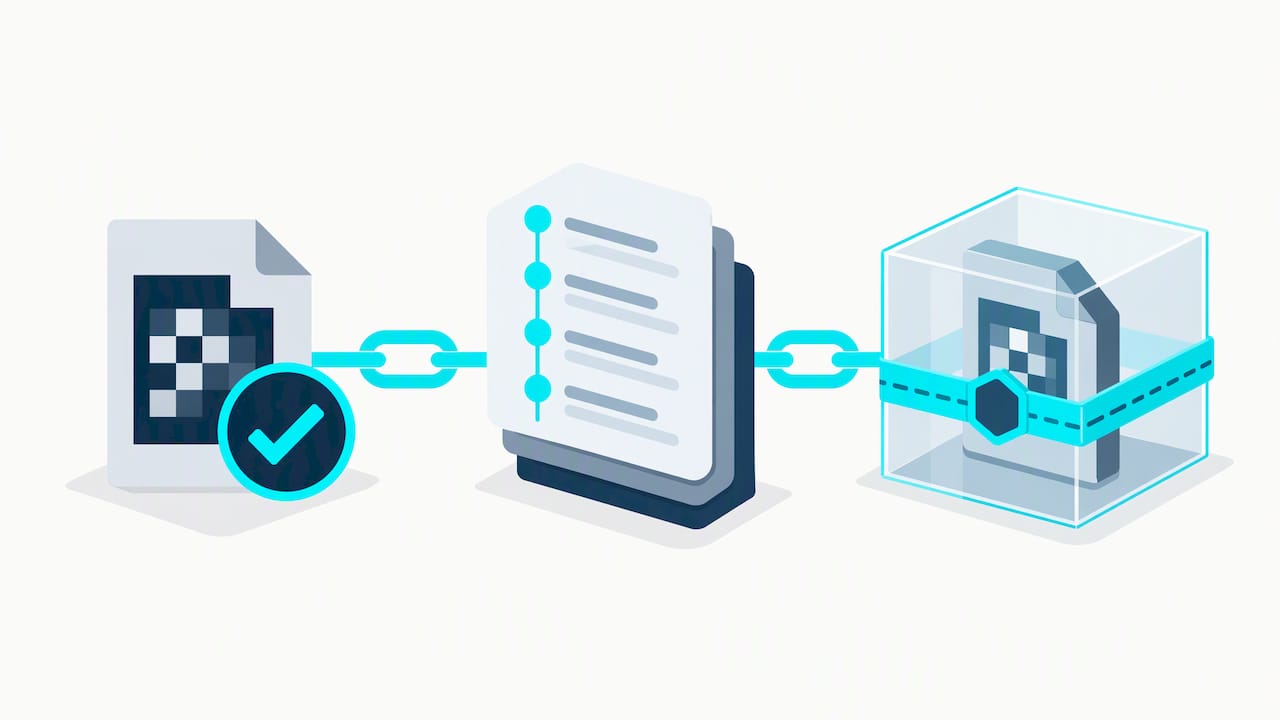
Third, cultivate outside scrutiny. Invite independent testing, seek peer review and engage forensic practitioners who can testify about your method without selling it. Finally, assume you will face both tests: aim for general acceptance in your field while keeping the validation record Daubert demands.
Why do these standards matter to credibility?
I think the real shift is not Frye versus Daubert but the rising expectation that any digital method comes with its receipts. Courts are looking harder at long-accepted techniques, so familiarity no longer protects a method. For forensic teams and vendors, validation records and honest error rates are not paperwork. They are the product’s credibility, and evidence that cannot withstand a challenge was never really an asset.
— Thiago Vieira
Build forensic credibility into your startup with Cybertech Acceleration
We help cybersecurity and AI startups build forensic components and market narratives that match what courts and buyers expect from judicial-grade evidence. If your product touches digital evidence, we can help you structure validation, documentation and US market entry together. Learn more about Cybertech Acceleration and get in touch with our team.
This article is general information, not a substitute for advice from a qualified lawyer. Consult a qualified legal professional about your own circumstances before acting on anything here.
FAQ
What is the major difference between Frye and Daubert?
Frye asks whether a technique has gained general acceptance in its field. Daubert asks the judge, as gatekeeper, to evaluate the reliability of the expert’s methodology, with general acceptance as only one factor.
Did Daubert overrule Frye?
In federal courts, yes: the Supreme Court held that Rule 702 superseded Frye. Frye is not gone everywhere, though, because some states still apply it or a hybrid.
What are the 5 Daubert criteria?
Courts commonly weigh testability, peer review and publication, known or potential error rate, standards and controls, and general acceptance. The list is flexible and not exhaustive.
Where does Frye still apply?
Several states retain Frye, while others use Daubert or hybrids. Confirm the controlling authority for the specific court before relying on either test.