ISO 27001 for Startups: Build the Lean ISMS Procurement Demands
If your startup needs enterprise or EU/UK customers, ISO 27001 is usually the right certification: it creates a formal information security management system, yields a certificate valid for three years, and opens doors in procurement reviews that otherwise stall deals. The first move is practical, not bureaucratic: define your scope and run a quick gap and risk assessment before committing budget or hiring a consultant.
TL;DR:
- Treat Annex A as a risk based menu: document applicable controls and exclusions in a Statement of Applicability that reflects actual engineering practices.
- A SaaS startup with 10 to 30 staff and no ISMS typically takes four to nine months, with costs of $10,000 to $50,000 or more.
- Choose SOC 2 first when US buyers specifically request its report; favor ISO 27001 when selling in the UK, EU, or similar markets.
- Prioritize multifactor authentication, role based access, tested backups, supplier agreements, and evidence such as access reviews and offboarding logs before the audit.
- Certification lasts three years, but annual surveillance audits require current access reviews, vulnerability scans, training records, and updated risk assessments and control choices.
Table of Contents
- What ISO 27001 and an ISMS actually require
- Who needs ISO 27001 and when to pursue it
- How to get ISO 27001 certified: step-by-step roadmap for startups
- Keeping the ISMS lean: implementation tips that save time and money
- Costs and timeline: what to realistically budget
- Controls SaaS startups actually need: translating Annex A into evidence
- ISO 27001 vs SOC 2 and NIST: which to choose and in what order
- Staying certified: surveillance audits and continuous improvement
- How accelerator support speeds time-to-readiness for cybersecurity startups
- When to prioritize ISO 27001 relative to product and funding milestones
- An adjacent option: compliance-ready market entry support
- FAQ
- Sources
What ISO 27001 and an ISMS actually require
ISO/IEC 27001 is the world’s best known standard for information security management systems, and it defines what an organization’s security program must do, not which specific tools it must buy, according to ISO/IEC 27001:2022. The standard’s main body, Clauses 4 through 10, sets requirements for leadership commitment, planning, risk assessment, resource allocation, operational control, performance monitoring, and continual improvement. Annex A then lists control categories, covering things like access management, cryptography, supplier relationships, and incident response, that organizations can draw from.
The part founders often misread is that Annex A is a menu, not a mandate. You pick the controls relevant to your risk profile and document the ones you exclude in a Statement of Applicability, a core deliverable that ties your risk assessment to your actual control choices. ISO publishes a dedicated handbook for smaller organizations that adapts these clauses with examples and case studies, specifically to reduce the need for extensive expertise or heavy financial investment, according to the ISO SME guide.
That matters because ISO 27001 is a management system standard built around proportionality. For a ten-person startup, this means:
- Document what your team actually does, rather than copying a 200-page policy template built for a bank.
- Scale control depth to risk: a customer database handling payment details needs more rigor than an internal wiki.
- Treat the Statement of Applicability as a living risk record, not a one-time compliance form.
- Expect auditors to check that your documented practices match your real operations, not that you’ve implemented every possible control.
Who needs ISO 27001 and when to pursue it
Certification is a commercial decision before it’s a technical one. The right trigger is usually a signal from the market, not an arbitrary milestone.
- Procurement requirements: an enterprise prospect’s security questionnaire or vendor onboarding process explicitly asks for ISO 27001 or an equivalent.
- Geography: you’re selling into the UK, the EU, or other markets where ISO 27001 is the default procurement expectation rather than SOC 2.
- Regulated or government buyers: public sector or regulated-industry contracts often specify ISO certification as a baseline requirement.
- Investor diligence: Series A or Series B investors increasingly expect a documented security posture, especially for cybersecurity and AI startups.
- Team and product maturity: you have enough structure (defined roles, a stable product, paying customers) to sustain an ongoing management system rather than a one-off audit scramble.
If your near-term pipeline is US-only and your buyers ask for SOC 2 reports specifically, it can make sense to prioritize that path first and layer ISO 27001 on later, a sequencing question we cover in more detail further down.
How to get ISO 27001 certified: step-by-step roadmap for startups
The certification path follows a consistent sequence regardless of company size, but startups can compress it by scoping tightly and avoiding unnecessary control bloat.
- Define your scope. Limit the ISMS boundary to the systems, data, and locations that actually touch customer data and product delivery. A narrow scope, for example “the production AWS environment and the engineering and customer success teams,” cuts both audit time and documentation volume.
- Assign ISMS roles and secure leadership commitment. Someone, often the CTO or a designated security lead, owns the ISMS day to day, and the founding team needs to formally back resourcing and policy enforcement.
- Run a risk assessment. Identify the realistic threats to your data and systems, rate likelihood and impact, and produce a risk treatment plan that says what you’ll fix, accept, or transfer.
- Draft the Statement of Applicability. Map each Annex A control to your risk assessment and your services, marking which controls apply and which don’t, with a documented reason for every exclusion.
- Implement prioritized controls. Focus first on multi-factor authentication, role-based access, a documented software development lifecycle, tested backups, and signed data processing agreements with critical suppliers.
- Collect operational evidence. Access logs, change logs, vulnerability scan reports, and training records all need to exist before an auditor asks for them, not after.
- Run an internal audit. This is a dry run against your own ISMS, meant to surface gaps while they’re still cheap to fix.
- Select a certification body and schedule Stage 1 and Stage 2 audits. Stage 1 reviews your documentation; Stage 2 tests whether your controls actually operate as described.
- Prepare for surveillance. Certification isn’t a one-time event; annual surveillance audits check that the ISMS is still functioning, not just that it existed on audit day.
For a SaaS startup with 10 to 30 staff and no existing ISMS, this process realistically takes four to nine months end to end, according to ISO 27001 guidance for SaaS startups. The spread depends heavily on how much remediation work the risk assessment uncovers and how fast engineering can close gaps.
Pro Tip: Build your evidence collection into existing tools (ticketing systems, CI/CD pipelines, identity providers) from day one rather than retrofitting spreadsheets right before the audit.
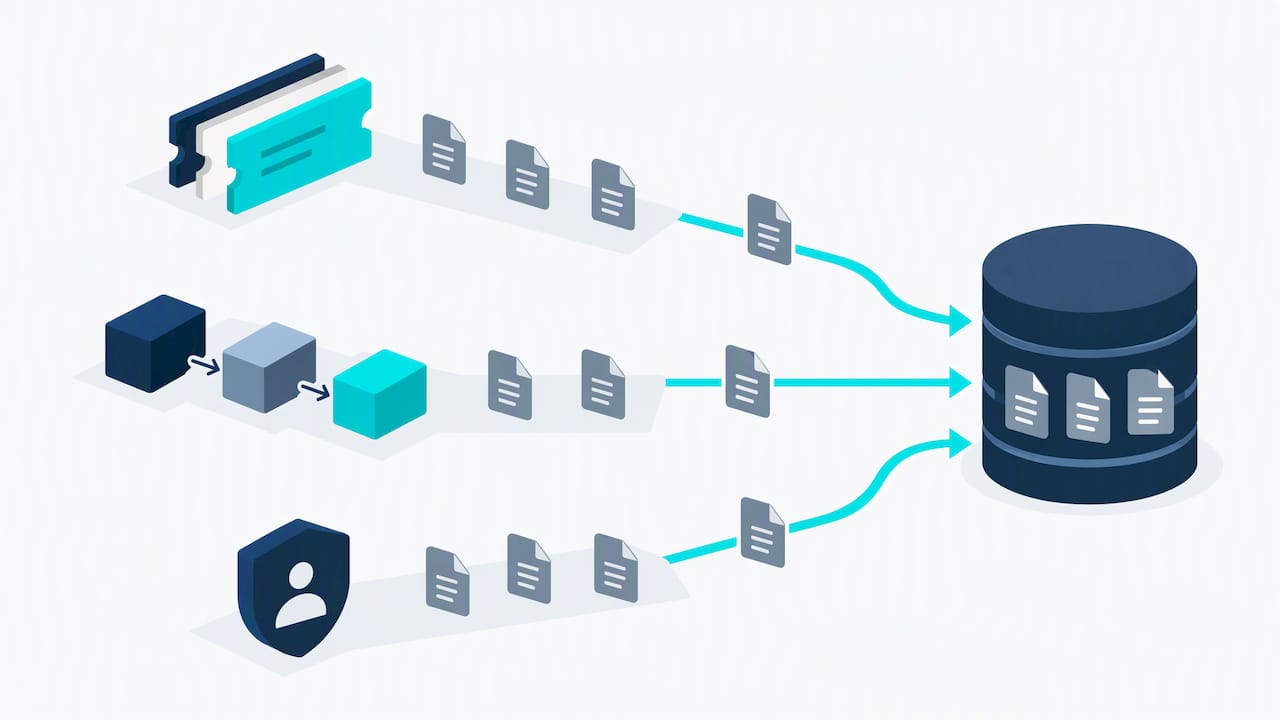
Common audit findings for small teams tend to cluster around the same few issues: incomplete offboarding records when an employee leaves, missing evidence that access reviews actually happened on schedule, and a Statement of Applicability that doesn’t match what the engineering team actually built. Catching these in your internal audit, step 7 above, is far cheaper than catching them in Stage 2.
Keeping the ISMS lean: implementation tips that save time and money
Startups that keep their first ISO 27001 project simple tend to pass faster and spend less. Overbuilding the ISMS to look like a large enterprise’s is the single biggest avoidable cost.
- Scope narrowly at first: cover only the systems that touch product-critical data, and expand scope in later cycles if the business grows into it.
- Treat your cloud provider’s own certifications and attestations as supporting evidence for your shared responsibility controls, not as a substitute for your own policies.
- Keep your policy set minimal: an information security policy, an access control policy, an incident response procedure, and a supplier management procedure cover most of what a small SaaS company needs, each a page or two rather than a binder.
- Replace long-form documentation with runbooks and checklists wherever an auditor will accept operational evidence over prose.
- Automate evidence collection where you can, pulling access logs, scan results, and training completions directly from the tools that generate them.
Pro Tip: When you do bring in outside help, structure it as a short, defined sprint (scope, risk assessment, SoA, and a punch list of control gaps) rather than an open-ended retainer; it keeps cost predictable and keeps your team accountable for implementation.
Related reading on embedding these practices into engineering workflows is covered in our guide to security by design for early-stage startups.
Costs and timeline: what to realistically budget
Two numbers matter here: how long certification takes and what it costs, and both vary mainly with your starting security maturity.
- Fast path: four to six months, typical for teams that already have decent access control and logging in place.
- Common path: six to nine months, typical for teams building most controls from scratch.
- Cost buckets: internal engineering and leadership hours, consultant or compliance-platform fees, certification body audit fees, and remediation or tooling spend to close gaps found in the risk assessment.
For a small SaaS startup with no existing ISMS, total certification costs commonly range from roughly $10,000 to $50,000 or more, depending on company size, current security posture, and how much outside help is used, according to ISO 27001 guidance for SaaS startups. Teams with mature access control and logging already in place land toward the lower end; teams starting with no formal policies or audit trail spend more on remediation.
One practical upside: once the ISMS, risk assessment, and evidence pipeline exist for ISO 27001, adding a SOC 2 report later costs noticeably less in incremental effort, since both frameworks draw on largely the same underlying controls.
Controls SaaS startups actually need: translating Annex A into evidence
Annex A reads abstractly until you map it to what a SaaS company runs day to day. For most startups, the applicable controls cluster into five groups.
- Access control: multi-factor authentication everywhere, role-based permissions tied to job function, and clean onboarding and offboarding logs that prove access was granted and revoked on schedule.
- Software development lifecycle: mandatory code review before merge, automated dependency and vulnerability scanning, and controlled promotion from staging to production.
- Cloud configuration: documented configuration baselines, tested backup and restore procedures, and centralized logging and monitoring across production environments.
- Third-party risk: security assessments for critical vendors and signed data processing agreements wherever a supplier touches customer data.
- Incident response: a written runbook, a log of actual incidents (even minor ones), and post-mortem records showing what changed afterward.
Auditors reviewing SaaS startups focus heavily on access control, separation between development and production, and supplier management, so concrete evidence like access logs and signed DPAs carries more weight than policy prose, according to ISO 27001 guidance for SaaS startups. For founders building these controls into the product lifecycle rather than bolting them on later, our 2026 guide to security by design covers the engineering side in more depth.
ISO 27001 vs SOC 2 and NIST: which to choose and in what order
ISO 27001 issues a certificate valid for three years with annual surveillance audits, while SOC 2 produces an attestation report that’s typically renewed every year, according to comparison guidance from CBH. The two frameworks overlap substantially in the controls they require, which is why many startups eventually pursue both rather than treating them as mutually exclusive.
- Choose ISO 27001 first if your buyers are concentrated in the UK, the EU, or other markets where it’s the default procurement expectation.
- Choose SOC 2 first if your near-term revenue is US-concentrated and prospects specifically request a SOC 2 report in vendor reviews.
- Expect overlap to work in your favor: once one framework’s ISMS and evidence pipeline exist, the second one requires meaningfully less incremental work.
- Reach for NIST-based frameworks (like the NIST Cybersecurity Framework) when a specific sector or national requirement calls for it, rather than as a general-purpose alternative to ISO or SOC 2.
For startups selling specifically into US enterprise accounts, our breakdown of SOC 2 considerations for international startups covers that path in more detail.
Staying certified: surveillance audits and continuous improvement
Certification isn’t a finish line. ISO 27001 issues a certificate valid for three years, but it comes with annual surveillance audits that check whether the ISMS is still operating, not just whether it existed when you passed Stage 2.
- Keep access reviews, vulnerability scans, and security training records current on a regular cadence, since surveillance auditors will ask for recent evidence, not evidence from the original audit.
- Treat risk assessment and the Statement of Applicability as living documents, updated whenever your product, infrastructure, or supplier list changes meaningfully.
- Fold ISMS tasks into existing product and operations workflows (sprint planning, onboarding checklists, vendor review processes) so compliance work doesn’t become a separate, forgotten track.
How accelerator support speeds time-to-readiness for cybersecurity startups
Technical readiness and commercial readiness aren’t the same thing, and startups often underinvest in the second. Translating a control set like MFA, access logging, and SDLC gates into language that resonates with procurement teams and investors reduces friction in deals that would otherwise stall on a security questionnaire.
Structured accelerator programs that focus specifically on this translation work can shorten the gap between “we have the controls” and “we closed the deal.” Practical value to look for includes:
- Templates and frameworks that map technical controls directly to the business narrative buyers and investors expect.
- Warm introductions to partners, certification bodies, or customers already comfortable with your target market’s compliance expectations.
- Structured, time-boxed sprints rather than open-ended advisory relationships, so progress is measurable.
When evaluating any accelerator for this purpose, ask specifically about structured market entry support, the quality of partner introductions, and documented program outcomes, not just general mentorship.
When to prioritize ISO 27001 relative to product and funding milestones
The founders who handle ISO 27001 best start before they’re forced to, not after a lost deal makes it urgent. Certification pursued reactively, three weeks before a Series B diligence deadline or an enterprise RFP, tends to produce thin documentation and controls implemented just well enough to pass, not well enough to hold up a year later. Build the ISMS before those moments arrive, so the certificate reflects real practice rather than a rushed performance for an auditor.
— Thiago Vieira, Founder, Cybertech Acceleration
An adjacent option: compliance-ready market entry support
Building an ISMS from scratch while also trying to close enterprise deals and prepare for fundraising is a lot to carry alone, and that’s where structured outside support can shorten the distance between “compliant on paper” and “credible to buyers.” We run Cybertech Acceleration, the first US accelerator dedicated exclusively to digital forensics for cybersecurity and AI startups, and we built our program specifically around the gap between technical security work and the commercial story that gets deals signed.
We help founders translate ISMS controls and forensic evidence capabilities into the business narrative that resonates with enterprise buyers and investors, pair that with structured market entry support, and make warm introductions across our network of partners and companies. Our Soft Landing service extends that support into local setup for founders entering the US market, and a region-specific mission offers a path for startups targeting that market directly.
If you’re weighing whether to hire a consultant, build internally, or get structured support alongside your certification work, explore our accelerator program to see whether it fits where your startup is headed next.
FAQ
How much does ISO 27001 cost?
For a small SaaS startup with no existing ISMS, total costs commonly range from roughly $10,000 to $50,000 or more, covering internal hours, consultant or platform fees, certification body audit fees, and remediation work. The exact figure depends heavily on your starting security maturity and how much outside help you use.
Is ISO 27001 hard to get?
It’s demanding but achievable for small teams: a SaaS startup with 10 to 30 staff and no prior ISMS typically reaches certification in four to nine months. The difficulty comes mostly from building consistent evidence and operational discipline, not from the standard’s requirements themselves.
Is ISO 27001 outdated?
No, the standard remains current following its 2022 revision and continues to serve as the principal international baseline for information security management systems, according to the ISO/IEC 27001 standard page. It’s actively maintained and still the most widely recognized ISMS certification globally.
Which is better, ISO 27001 or NIST?
Neither is universally “better”; they serve different purposes. ISO 27001 is a certifiable management system standard recognized internationally, while NIST frameworks are typically used for sector-specific or national compliance needs in the United States, and many startups end up using elements of both depending on their buyers.
Sources
- ISO/IEC 27001:2022 - Information security management systems
- ISO 27001 for SaaS Startups: What You Actually Need to Do
- ISO 27001 vs SOC 2: key differences and when you need each (CBH)