Design Partner Program: How to Build One That Converts

A design partner program is a time-bound, structured arrangement in which a handful of early customers help you decide what to build, in exchange for influence, priority support and usually better pricing. It is not a beta test and it is not a free trial. If you sell security or AI software to businesses, it is often the step between a prototype and your first real revenue. This guide covers when to start, whom to recruit, what to put in the agreement and how to end the program with a contract rather than a polite thank-you.
TL;DR
- A design partner program runs with 5 to 15 hand-picked customers, typically for 8 to 12 weeks, to shape the product, not to find out whether the problem exists.
- In cybersecurity, the strongest programs are paid pilots. Fees of roughly $15k to $40k are reported to fit within CISO discretionary budgets and prove real intent.
- Put an end date, one success metric and a conversion path in writing, so you do not become a development shop for one customer.
- Early adopter programs and design partner programs are different tools. Pick the one that matches the question you still have to answer.
- International founders should recruit US partners as peers, leading with the operational problem rather than the feature list.
Table of Contents
- What a design partner program is, and what it is not
- When to start (and when to wait)
- How many partners, and for how long
- Whom to recruit: four screening criteria
- Free, discounted or paid?
- The agreement: scope it so it cannot drift
- Running the program week to week
- Ending the program with a contract
- Recruiting US design partners from abroad
- Our perspective: evidence is what a security buyer is really testing
- Where an accelerator fits
- Common mistakes to avoid
- FAQ
- Sources
What a design partner program is, and what it is not
Design partners are, in the words of Andreessen Horowitz, the first few users who help you define the problem space and shape your solution. They give feedback on functionality, user experience, pricing and packaging. They are co-creators, not an audience.
That separates them from the other early-customer labels readers often mix up:
| Program | The question it answers | Typical shape |
|---|---|---|
| Design partner program | What should we build? | Small cohort, regular working sessions, written scope |
| Beta or early adopter program | Does what we built survive real data and real load? | Larger cohort, lighter involvement, bug and usability focus |
| Paid pilot or proof of concept | Does this deliver measurable value in our environment? | One account, fixed success criteria, conversion decision at the end |
| Early access | Who wants this once it exists? | Waitlist, little commitment |
This framing follows a decision table on design partner versus beta customer programs: if what is still open is what to build, you want a design partner. If what is open is whether the thing you already built holds up, you want beta customers. Swapping the labels is how a team ends up running a design partner program that produces only a bug list.
If you searched for early adopter programs, the practical advice is the same: write down the one decision the program has to settle before you choose the name.
When to start (and when to wait)
Design partners are for product-shaping, not for customer discovery. If you have not yet confirmed that the problem is real across a segment of the market, a16z warns that you are in the wrong phase. Start too early and you risk what practitioners call custom-build hell, where the roadmap locks to the narrow, unscalable needs of a single customer.
You are probably ready when:
- You have had enough discovery conversations to describe the problem in the buyer’s words, and several people have recognized it.
- You have a working prototype, a demo environment or at least a credible design to react to.
- You can name the one decision you want the program to settle, such as which workflow to automate first or how evidence should be exported.
- You can commit engineering time to act on feedback within days, not quarters.
If the first two are missing, spend another month on customer conversations. A design partner program will not rescue an unproven problem.
How many partners, and for how long
Guidance reviewed for 2026 puts programs at 5 to 15 partners over 8 to 12 weeks, with roughly 30 to 60 minutes per week from each partner. Some onboarding playbooks ask for 1 to 4 hours a month and a formal 90-day pilot cycle. The numbers vary, but the logic holds.
- Too few (one or two): you risk building for a single environment.
- Too many (more than about 15): you cannot hold a real conversation with each one, and the program turns into a beta.
- Too long: urgency fades and feedback becomes a habit instead of a decision input.
Most early-stage security startups do well with three to five committed partners across at least two different industries, so the patterns you see are not one company’s quirks.
Whom to recruit: four screening criteria
The best design partner is not the friendliest contact in your network. Onboarding guidance used by practitioners suggests confirming four things:
- Authority. They can buy, or sit one step from the person who can, and you can see a path to budget.
- A pressing, recurring problem. It shows up in their weekly work, not as a nice-to-have.
- Time. They will join the calls and review sessions.
- Access. They can provide real workloads, data or environments to test against.
Use a deliberate “not for everyone” message when you pitch. Tell prospects the program is intense, that you will ask for honest criticism, and that you are choosing only a few companies. That framing filters out curious tourists.
One more test: a partner who will not engage with real production-style data, or with complex synthetic data treated as real, is a user rather than a partner. Feedback is not validation.
Free, discounted or paid?
In consumer and low-risk software, discounts are common. In cybersecurity, the evidence points toward paying. A small pilot fee, reported at $15k to $40k, is intentionally set to sit inside a CISO’s discretionary budget, which helps you avoid slow procurement while showing the buyer is willing to pay. Treat these as reported ranges from one 2026 guide, not a price list. Your own figure should reflect the partner’s size, the effort involved and what you give in return.
A free partner can still be right when you need access to a regulated environment you could not otherwise reach. If you go that way, make the commitments just as concrete: time, data access, a named reference at the end.
Common Paper covers contracts, letters of intent and charging design partners in more depth, and publishes a standard agreement you can adapt with your lawyer.
The agreement: scope it so it cannot drift
A written agreement is the tool that prevents custom-build hell. Practitioner templates set out the same core elements:
- A fixed duration, for example 12 weeks, with an explicit end date.
- One success metric. Not five. Pick the number that would convince the partner’s own management.
- A conversion path. What happens on day 85: renewal at an agreed price, an annual contract, or a clean exit.
- Data and confidentiality terms. If the partner shares real data, you will likely need a data processing agreement and a master services agreement alongside the pilot terms.
- Reference rights. Decide up front whether you may name the partner, cite results or use them as a reference. Asking in week twelve is too late.
The agreement also protects the partner. They know what you will deliver and when, which is part of why a security buyer will sign.
Running the program week to week
Set the cadence
Hold a short weekly or biweekly working session with each partner, plus a written summary after each one. Keep a shared log of what you heard, what you decided and why. Interview questions should be about their workflow (“Walk me through the last time this went wrong”) rather than about your features (“Would you use this?”).
Close the loop visibly
The most common failure is treating design partners as friendly users. Investors advising B2B SaaS founders argue partners must feel they are shaping the roadmap, and that you need a mechanism to show them when their feedback changed a decision. If you are not willing to hear that a core assumption is wrong, the relationship will not produce the sharp signal you need.
A simple habit works: open every session with “Here is what you told us last time, and here is what we changed.”
Say no, often
A partner’s request is a data point, not an order. If only one partner needs it, log it and move on. If three of five ask for it, it belongs on the roadmap.
Ending the program with a contract
In cybersecurity, successful partnerships are increasingly structured as paid pilots with a clear conversion path. The same guide says venture-backed startups are now expected to produce a signed ROI memo by the end of a 12-week pilot, quantifying a specific improvement such as hours of analyst triage time saved, and cites annual contracts in the $60k to $150k range as the follow-on. It also reports that well-structured pilots with concrete, measurable success criteria convert at very high rates. Those are one source’s observations, so use them as benchmarks, not promises.
What to do in the last two weeks:
- Measure the agreed metric with the partner, not for them.
- Draft a one-page results memo and have the partner’s champion edit it.
- Present the conversion terms you agreed at the start.
- Ask for the reference or case study you already wrote into the agreement.
This memo is also your best fundraising artifact. Investors in security want evidence that a buyer paid and stayed.
Recruiting US design partners from abroad
Founders outside the US often lean on warm introductions, and warm contacts are frequently too polite to be critical. Advice from founders who have entered the US from India suggests approaching US partners peer to peer: name their specific domain problem, not your feature set, and show you understand their operational pain better than their current vendor does.
Two practical additions:
- Choose partners in the same industries you plan to sell to, so the program doubles as market entry.
- Have a US entity, contract terms and a data-handling story ready before the first call. Security buyers ask early.
For the wider picture, see our guides on expanding a cybersecurity startup to the US market and cybersecurity accelerators for international founders.
Our perspective: evidence is what a security buyer is really testing
We are an accelerator dedicated exclusively to digital forensics, working with cybersecurity and AI startups. From that vantage point, one pattern stands out: security buyers rarely doubt that a tool can do something. They doubt whether it will hold up when someone has to defend its output, to an auditor, an insurer, opposing counsel or a board.
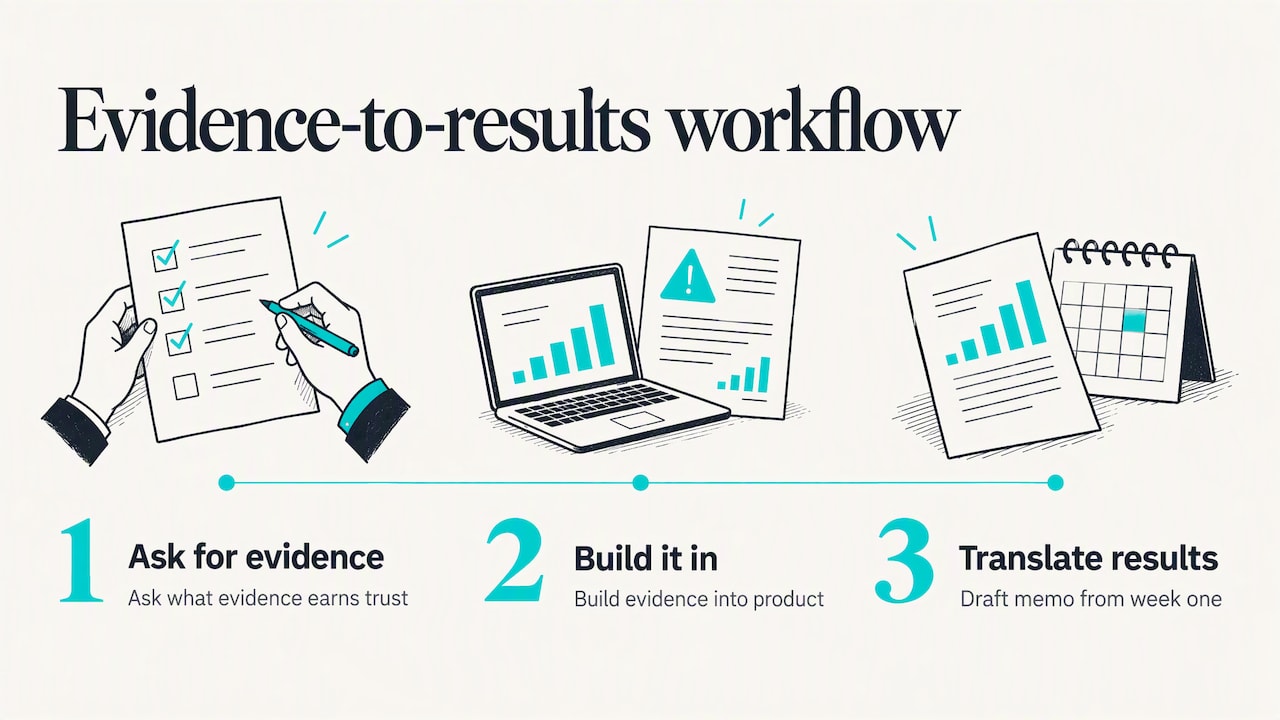
That changes how a design partner program should be run. We would encourage founders to ask partners what evidence they would need to trust a result, and to build that into the product during the program, not after. Can an alert be reconstructed? Can an AI decision be traced? Can an investigation artifact be exported in a form a third party would accept? Those questions turn a partner’s vague “we like it” into a requirement you can build, and they give you a differentiator in a crowded market.
The second pattern is translation. Founders tend to report what the product does. A partner’s management wants to know what changed in their risk, cost or time. The results memo at the end of the program is where that translation happens, and it is worth drafting from week one.
— Thiago Vieira
Where an accelerator fits
A program like this is easier with introductions, a commercial narrative and a clear market-entry plan. That is the gap Cybertech Acceleration is built to fill for cybersecurity and AI founders: judicial-grade forensic capability in the product, support turning technical strengths into a pitch buyers and investors follow, and warm introductions to potential partners. If you are a non-US company, our soft landing offer supports US entry, and the Cybertech Texas Mission is a way to meet US stakeholders in person. You can see how portfolio companies position themselves, for example CyberX in pentest and red team work.
We also cover how accelerators help cybersecurity founders scale if you are weighing your options.
Common mistakes to avoid
- Starting before the problem is proven. You will optimize for one customer’s quirks.
- Recruiting fans instead of buyers. If no budget path exists, the pilot cannot convert.
- No end date. Open-ended programs become unpaid consulting.
- Too many success metrics. Choose one.
- Hiding the commercial intent. Partners respect a clear conversion path more than vague goodwill.
- Not showing what changed. If partners cannot see their influence, they disengage.
FAQ
How do I find a design partner?
Start with people who live with the problem: practitioners you have interviewed, former colleagues now in buying roles, and communities in your target industry. Approach them with the specific problem you are solving and a clear ask on time and commitment. Screen for authority to buy, a recurring pain, time and data access before you offer a seat.
How many design partners do I need?
Guidance for B2B products commonly cites 5 to 15 partners, though a very early security startup may run well with three to five. The right number is the most you can talk to every week and still act on what they say.
Should design partners pay?
In cybersecurity, often yes. A modest paid pilot fits within discretionary budgets and tests real intent, as reported in 2026 seed-stage guidance. Free access can make sense for hard-to-reach environments, but write the commitments down either way.
What is the difference between a design partner and an early adopter?
A design partner shapes what you build and has a contractual seat in the process. An early adopter uses a product that is further along and mostly tells you whether it works. If your open question is what to build, run a design partner program. If it is whether the product holds up, run a beta.
Sources
- A Framework for Finding A Design Partner, Andreessen Horowitz
- Design Partner Program guide, Koji
- Raising a seed round for a cybersecurity startup in 2026, Causo Hub
- Design Partner Onboarding, SZL Holdings
- Design Partner MOU Template, Do What Matter
- Finding US design partners as an India-based founder, Operator Blog